
Comune Francavilla Bisio
Useful information for your stay
via Roma - 15060 Francavilla Bisio (AL)
Tel. +39 (0143) 501.22
Fax: +39 (0143) 350.900
E-mail: protocollo@comune.francavillabisio.al.it
https://comune.francavillabisio.al.it/
A papal bull dated December 13, 1375, documents how the jurisdictional territory that, starting in the 14th century, took the emblematic name of Francavilla was occupied by the ancient Bassignana di Val Lemme. Indeed, in the aforementioned document, the two toponyms are combined: the new Francavilla specifically designates the castle and villa built high on the hill, and the ancient Bassignana and Bassignanella indicate the surviving urban agglomeration below, on the plain, which had already risen around the year 1000, presumably from Saracen ruins.
The two toponyms created doubt and confusion: to experts, Francavilla—which means "city benefiting from exemptions and founded by free men"—seemed a village devoid of history, and there were those who ended up attributing historical events pertaining to Bassignana di Val Lemme to Bassignana founded in the Valenza region near the Po River.
On April 6, 1217, Emperor Frederick II confirmed the possession of several Cistercian granges, including that of Val Lemme, by the Abbey of Rivalta. On March 13, 1231, the treaty between the Genoese and the Alexandrians was signed in this monastic district. In the 14th century, around 1340, the name Bassignana di Val Lemme gradually disappeared, giving way to Francavilla.
Documents dated 1343, 1375, and 1390 mention Francavilla and Bisio in connection with boundaries, irrigation ditches, and the transfer of woodlands (oak).
Bisio, whose name appears to derive from the ancient Ligurian name for the blueberry (boso), a fruit found in the local woods, has documented traces dating back to 1419, when Pope Martin V took possession of the castle and Filippo Doria, feudal lord of Mornese, became the new feudal lord of Bisio in 1463.
Luchesio Spinola, lord of Arquata, was the first imperial feudal lord of Francavilla, and his dominion over the village was already fully effective by 1390. The Spinola family of Francavilla remained lords of the place until the 18th century, consolidating the imperial Ligurian fiefdom through a treaty with the Duke of Orleans in 1934 and with the Republic of Genoa in 1396 and 1397.
Eliano Spinola Carrozzo was elected Governor of the Spinolino State of the Scrivia Valley, Borbera Valley, and Lemme Valley in 1448.
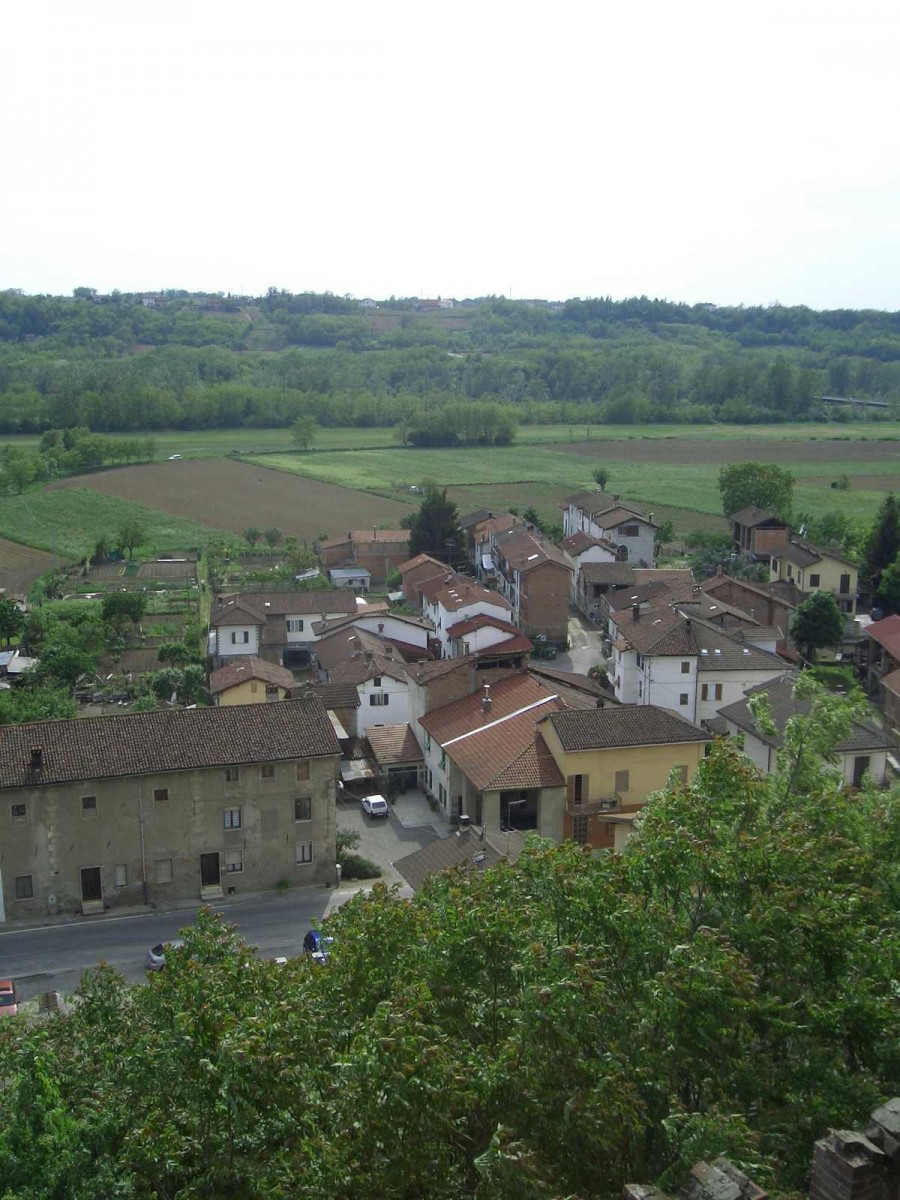
The castle, Owned by Count Cesare Giriodi Panissera di Monastero, it overlooks the village of Francavilla. The current building is the result of successive expansions and renovations of the ancient tower, which existed since the 10th century. The building is located in a dominant position and features a monumental square tower, a beautifully structured main body, a moat, and a drawbridge. During the Second World War, it was transformed into a logistics base for the German army.
The parish church, dedicated to Our Lady of Grace, is a recent construction (1950). Located in the center of the town, its exterior echoes the exposed red brick of the nearby castle. Its simple architecture (modern Romanesque?) has three naves and a frescoed apse. With a grand staircase leading to the entrance, a bell tower was added only in 1983.


- Home
-
-
- Events calendar
-
-
Areas of interestAccomodation
- Photographic Archive
-
-
-
-
Tourist information
