
Comune Cassine
Useful information for your stay
piazza Vittorio Veneto - 15016 Cassine (AL)
Tel. +39 (0144) 715.151
Fax: +39 (0144) 714.258
E-mail: protocollo@comune.cassine.al.it
https://www.comune.cassine.al.it/it-it/home
Cassine occupies a unique geographical location, both due to its proximity to the Bormida River and its proximity to about fifteen municipalities. The town was one of a dozen villages crossed by the Monferrato Free Road, a trade route that linked the Lower Monferrato to the Upper Monferrato and then connected the markets of Asti and Vercelli to Liguria. Today, ten municipalities, including Cassine, Gamalero, Carentino, Bergamasco, Oviglio, Quattordio, Felizzano, Fubine, and Altavilla, have joined forces to restore the ancient road and create a 55 km hiking trail.
Cassine has distant origins dating back to the Iron Age and perhaps even the Neolithic. It was later inhabited by Ligurian peoples and, after 173 BC, was annexed by the Romans to ancient Acqui Terme.
The town, with nearly 3,000 inhabitants, has experienced countless historical events, documented since 985, often playing a leading role. It has passed under various lords, including Otto III, Frederick Barbarossa, the Marquises of Monferrato, Charles V, Gian Galero Visconti, the French, and the House of Savoy from 1707 onwards. Indeed, the figures who have played a key role in the town's political life are countless, and the historical documentation is extensive.
The town is astonishing for the number and size of its ancient noble palaces, evidence of a past of great wealth.
Built as a fortified house (casaforte), for example, is the 1400s palace of the Zoppi counts, the residence of those who owned the fiefdom at the time. The palace, formerly owned by the Sforza family, is composed of several medieval buildings, including a tower with remains of walls belonging to a previous construction. The main floor preserves 14th-century frescoes depicting scenes from the lives of the nobles. The courtyard, embellished with an arched portico and decorated with heraldic and geometric motifs, houses archaeological finds, and the private chapel houses a precious 14th-century panel painting of the Madonna and Child.
Casa Pero features a late Gothic structure and decorations, while Casa Arcasio is located near the Palazzo del Comune, which also comprises several buildings with a beautiful 16th-century portal and a Renaissance-style courtyard.
The list of buildings is long: Casa Mazzoleni, Palazzo Buzzi – Pietrsanta, a medieval tower house resulting from the transformation of a pre-existing building, Casa Del Fante, Casa Guerrina, Casa Gambarotta, Casa Porri, and others. Not all of the buildings are in excellent condition; in fact, many would require major renovations. It would be truly incredible to have a village of this size, with such a wealth of architectural and historical heritage, in perfect condition.
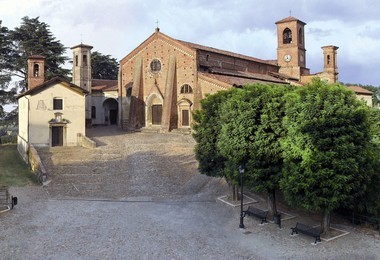
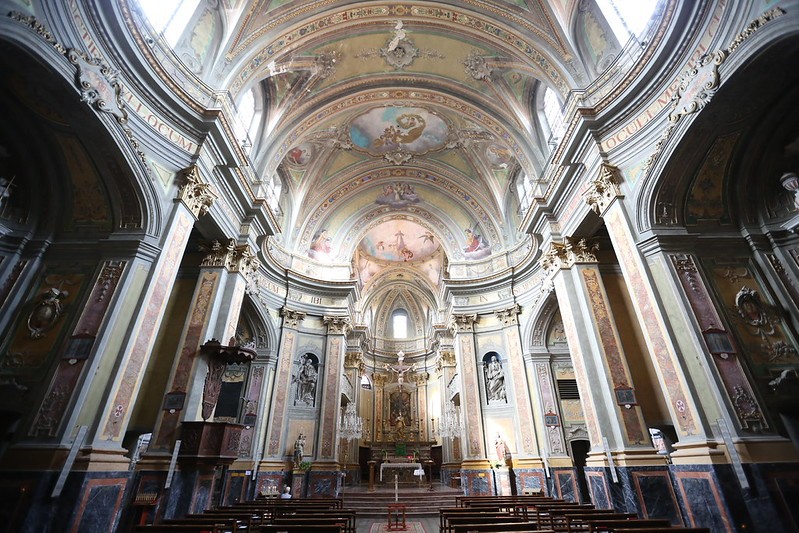
Among the numerous medieval houses, the Church of San Francesco stands out. It is one of the few significant examples of Lombard Gothic architecture in Piedmont, with Cistercian influences. Built between 1200 and 1300, it features an asymmetrical façade characterized by large buttresses. Inside, there are 15th-century frescoes and sculptures. Built by Robert of Anjou, King of Naples, in memory of his brother, the three-nave church has been remodeled several times. Part of the ancient cloister now houses the Museum of Sacred Art, which preserves paintings and wooden sculptures of great beauty, as well as precious reliquaries.
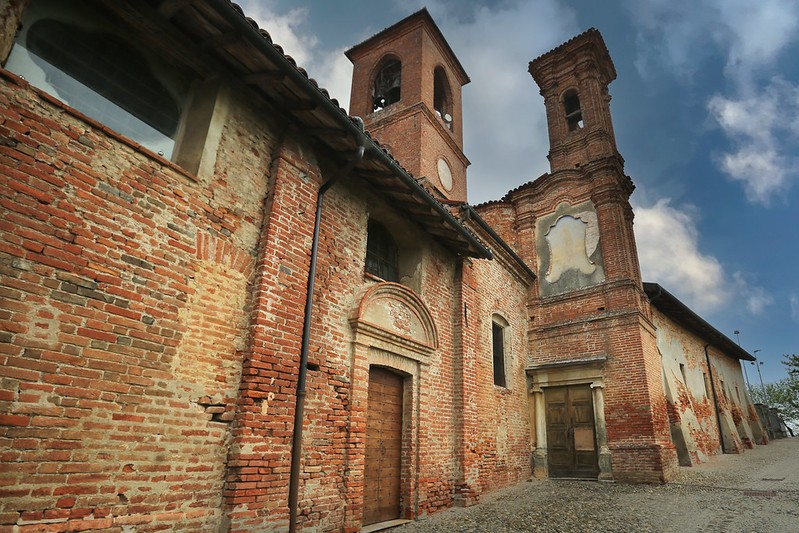
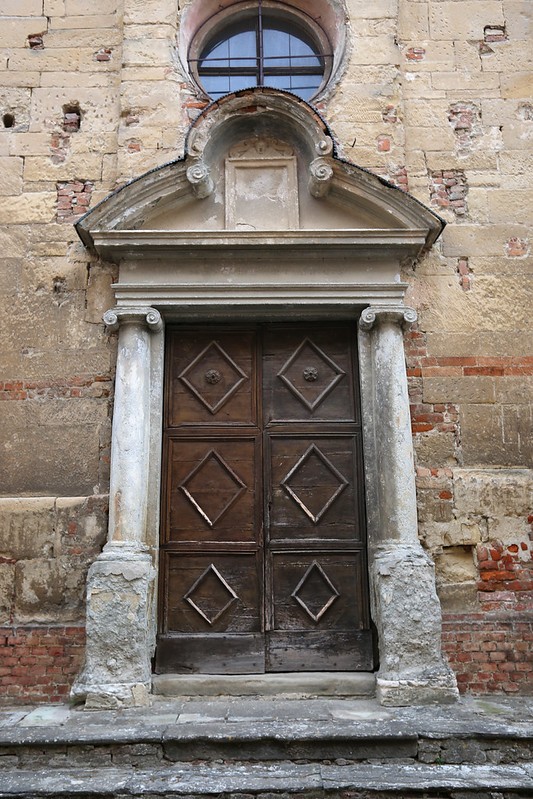
Near the medieval church are three other churches: Sant'Antonio Abate, San Bernardino, and the Church of the Holy Trinity. Finally, we note the Church of San Giacomo, likely from the 12th century, built with large blocks of sandstone and bricks, certainly added at a later date.
The municipality of Cassine organizes numerous festivals, concerts, fairs, and events. Among the most interesting: the medieval festival in September, the ancient dance festival featuring dances dating from the 1400s to the 1700s, and, for fans of musical bands, the "Scorribanda Cassinese" event in June, which takes place alongside the Ravioli Festival.
(photo from the municipality's website)


- Home
-
-
- Events calendar
-
-
Areas of interestAccomodation
- Photographic Archive
-
-
-
-
Tourist information
