
San Michele e Convitto Paterno
Useful information for your stay
piazza San Michele, 1 - 15057 Tortona (AL)
Tel. +39 (0131) 861.373
http://www.diocesitortona.it
The earliest records date back to 1182 and come from the papermakers of the Rivalta Scrivia Abbey. At the end of the 16th century, the church underwent restoration work, while during the first half of the 17th century, the collapse of the bell tower destroyed part of the old building, necessitating a complete reconstruction. The naves were abolished, and no noble materials or rich decorations were used.
The church's current appearance is the result of renovations carried out between the late 19th and early 20th centuries. In 1934, the parish passed to the Congregation of Don Orione.
EXTERIOR
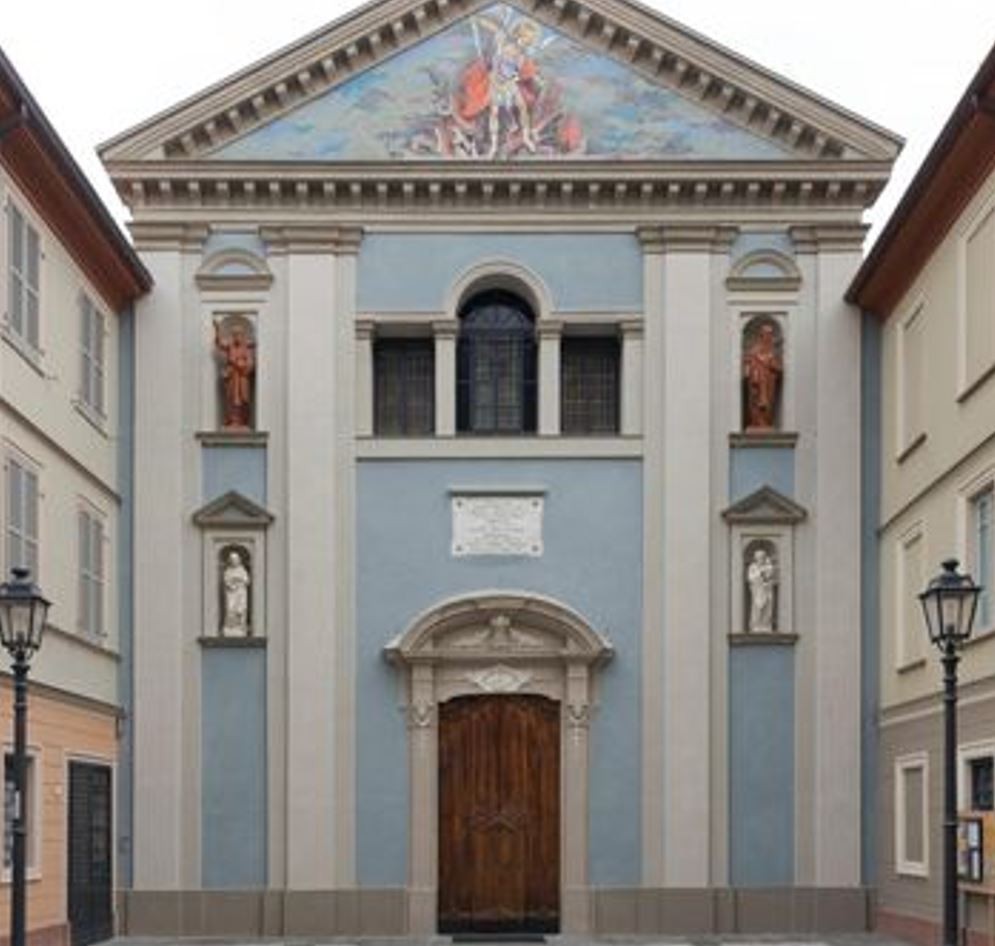
The gabled façade, the result of the 1853 restoration, is punctuated by Doric pilasters; the triangular tympanum, decorated with
mosaic, depicts Saint Michael; four statues—two marble and two terracotta—in niches depict Saints Peter and Paul above, and the Madonna with Saint Joseph below.
INTERIOR
The decorative frescoes in the nave, by the painter Rodolfo Gambini, date back to 1895, while the presbytery wall decorations were created by Cesare Secchi between 1950 and 1956. Noteworthy is the wooden statue of the Madonna del Carmine with Saint Simon Stock and Angels from the Montecucco di Gavi workshop, dating back to 1844.
HOUSE OF DIVINE PROVIDENCE – PATERNO BOARDING SCHOOL
The boarding school opened in 1904, after various vicissitudes, within the premises of the "Casa Oblatizia," annexed to the
church of San Michele. Directed by Don Orione himself, it became the "House of Divine Providence" and later the true "Mother House" of the Congregation, as the saint's official residence.
After extensive renovations, the oratory was opened, and the first printing and carpentry workshops, followed by tailoring and shoemaking, were opened.
The Motherhouse became the center of all the Congregation's initiatives, and in 1927, the Convitto Paterno became a training center for aspirants to the priestly and religious life.
The designation "paternal" in reference to the boarding school denotes a specific pedagogical intent dear to Don Orione, who was
convinced of the importance, in education, of the father figure as a model, a holder of authority, yet open to dialogue, understanding, and sincere charity.
Inside, the Chapel of the Motherhouse and the two "Cameratte di Don Orione" are still visible; the latter have retained their characteristic of poverty and simplicity, with objects used by the saint and the images and documents dear to him.


- Home
-
-
- Events calendar
-
-
Areas of interestAccomodation
- Photographic Archive
-
-
-
-
Tourist information
