
San Giovanni Battista
Useful information for your stay
via Goffredo Mameli, 2 - 15045 Sale (AL)
Tel. +39 (0131) 841.31
http://www.diocesitortona.it
An ancient parish church outside the village was first mentioned in 1009. The parish church is mentioned in the will of Miles Giorgio dated May 11, 1091, who left the church a thousand perches of land.
At the end of the 13th century, the church was placed under the patronage of the monks of San Marino of Pavia, as evidenced by a deed in the Rivalta parchments of 1306. However, starting in 1418, the parishioners of Salerno attempted to separate the church from the monks of Pavia. In 1434, they obtained the appointment of their own parish priest, independent of San Marino, but it was only with a papal bull of April 22, 1450, that San Giovanni was separated from the Pavia monastery, while the dispute over the division of the benefits was concluded the following year. The old parish church was abandoned due to the new church built in the village; It was listed as a ruin during the Gambara pastoral visit of 1595.
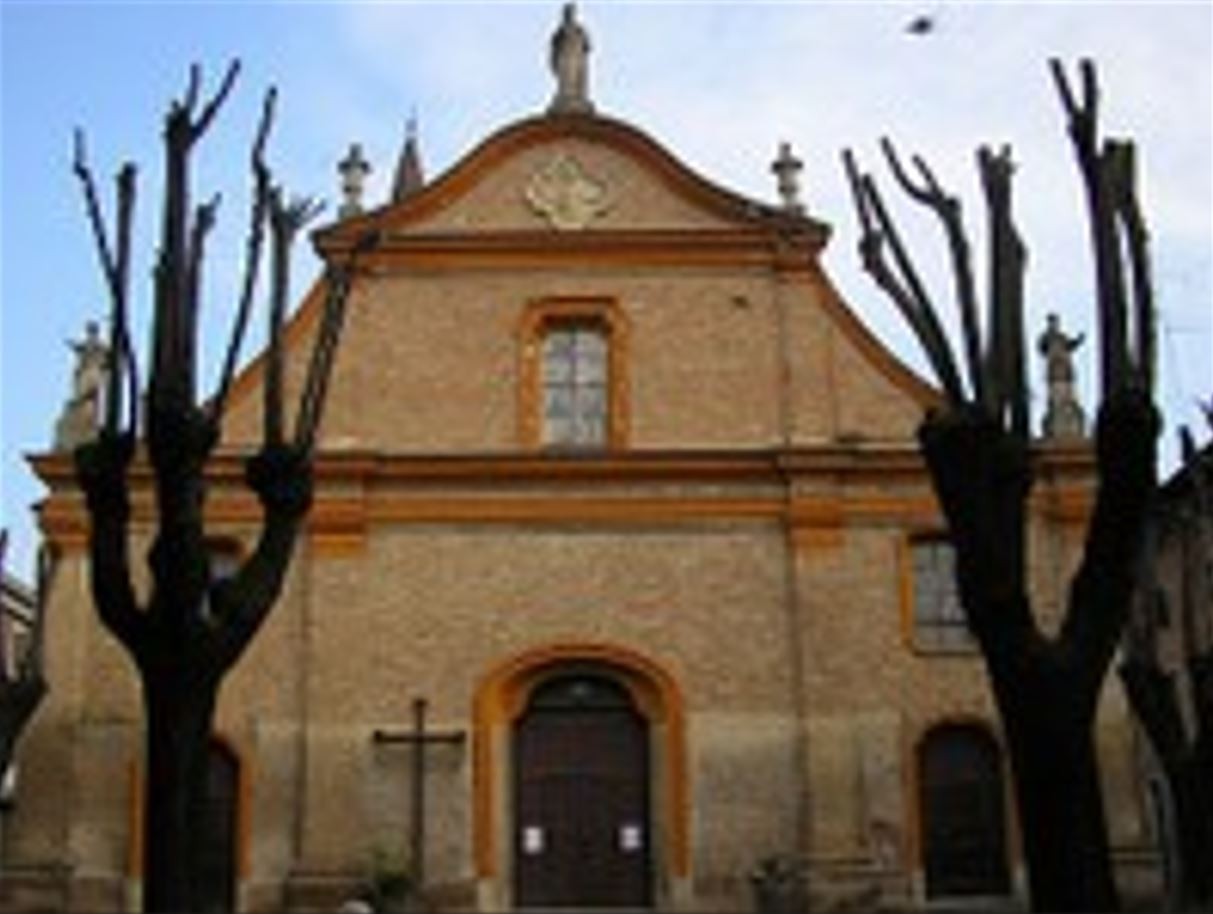
The foundation of the new church of San Giovanni dates back to August 29, 1453, when the first stone was laid with a deed by notary Monildo in the area of the village belonging to the Pavia monastery of San Marino. A few years later, the remarkable bell tower was built, splendid in its Gothic spire structure and its masonry enriched by the insertion of ceramic basins. The new building was consecrated in 1535 by the Bishop of Vigevano, Natale Della Tour, and completely remodeled in the vaults and façade at the end of the 17th century by Archpriest Grandi. It was reconsecrated by Bishop Settala in 1681.
The organ located in the counterfaçade was built in 1814 by the Lingiardi company of Pavia.
The religious building dedicated to San Giovanni preserves a 19th-century fresco decoration (ca. 1856) in the apse by Francesco Mensi (Alluvioni Cambiò 1800-Alessandria 1888). Several canvases adorning the side altars are also by the same artist. Mensi, a sought-after and prolific painter, distinguished himself for his stylistic refinement and the purity of his forms, favoring sacred themes and portraits alongside historical and mythological subjects.
The wooden statue of the Virgin of the Assumption by the Gavian sculptor Luigi Montecucco (mid-19th century) is also of notable craftsmanship.


- Home
-
-
- Events calendar
-
-
Areas of interestAccomodation
- Photographic Archive
-
-
-
-
Tourist information
