
Comune San Sebastiano Curone
Useful information for your stay
piazza Roma, 7 - 15056 San Sebastiano Curone (AL)
Tel. +39 (0131) 786.205
E-mail: info@comune.sansebastianocurone.al.it
http://www.planetvisions.it/virtualtour/SanSebastiano.html?fbclid=IwAR1-xp0UIXvj-8CDI34vUG0_bKvPHv4sqb7IPXa-tYemYyIFEY215QLYhNo
https://www.comune.sansebastianocurone.al.it/it-it/home
https://www.sansebastianocurone.com/
The history of San Sebastiano doesn't have its roots in the distant past.
It is a town born from the road and trade. A castle, a small chapel dedicated to San Sebastiano, a customs house at Cascina Cabella (where the Spinola family collected tolls, now in the municipality of Dernice), and the presence of refreshment stands along the road from Piacenza to Genoa favored, between the 15th and 16th centuries, the rise of a settlement dependent on Gremiasco in the Imperial Fiefdom of Fabbrica Curone, first ruled by the Fieschi family and later passed to the Doria family.
Nor was there a shortage of smugglers (or "sfroso" as recorded in documents of the time), while agriculture, given the small size of the municipal territory, was of marginal importance.
This territory acquired strategic and commercial importance under the Spanish, when the port of Genoa was the departure and arrival point for trade with Spain and the Po Valley.
Thus, San Sebastiano Curone became a meeting place and a trading post along the Via del Sale (or Via del Cereale, depending on the goods), where muleteers in long caravans, those coming from Genoa and those from the State of Milan, exchanged products. This led to the development of a sort of "logistics center" ante litteram, with large warehouses, inns and taverns, blacksmiths, and brokers.
This commercial vocation remained alive over the centuries.
In the mid-19th century, when the carriage road was opened, San Sebastiano Curone was authorized to hold three annual fairs, in the months of August, September, and October. These later became two monthly fairs, on the second and fourth Wednesdays. They were the most important in the valley and were highly attended until the 1950s.
It was around the mid-10th century that the Bishops of Tortona, especially Gerberto and Giseprando, began to assert their supremacy over the lands of our valley, even in civil matters. Although the Bishops usually exercised this authority through Minor Feudatories, we do not know by what title they received this Investiture.
Thus, in 1349, the Bishop of Tortona, Giacomo Visconti, donated the Feud of Fabbrica, which included Gremiasco and the hamlet of San Sebastiano, to Opizzino and Federico Malaspina; in 1485, the wealthy Genoese Fieschi family purchased the same Feud, to establish a small kingdom on the mountain, as a force in internal conflicts and a bulwark on the communication route.
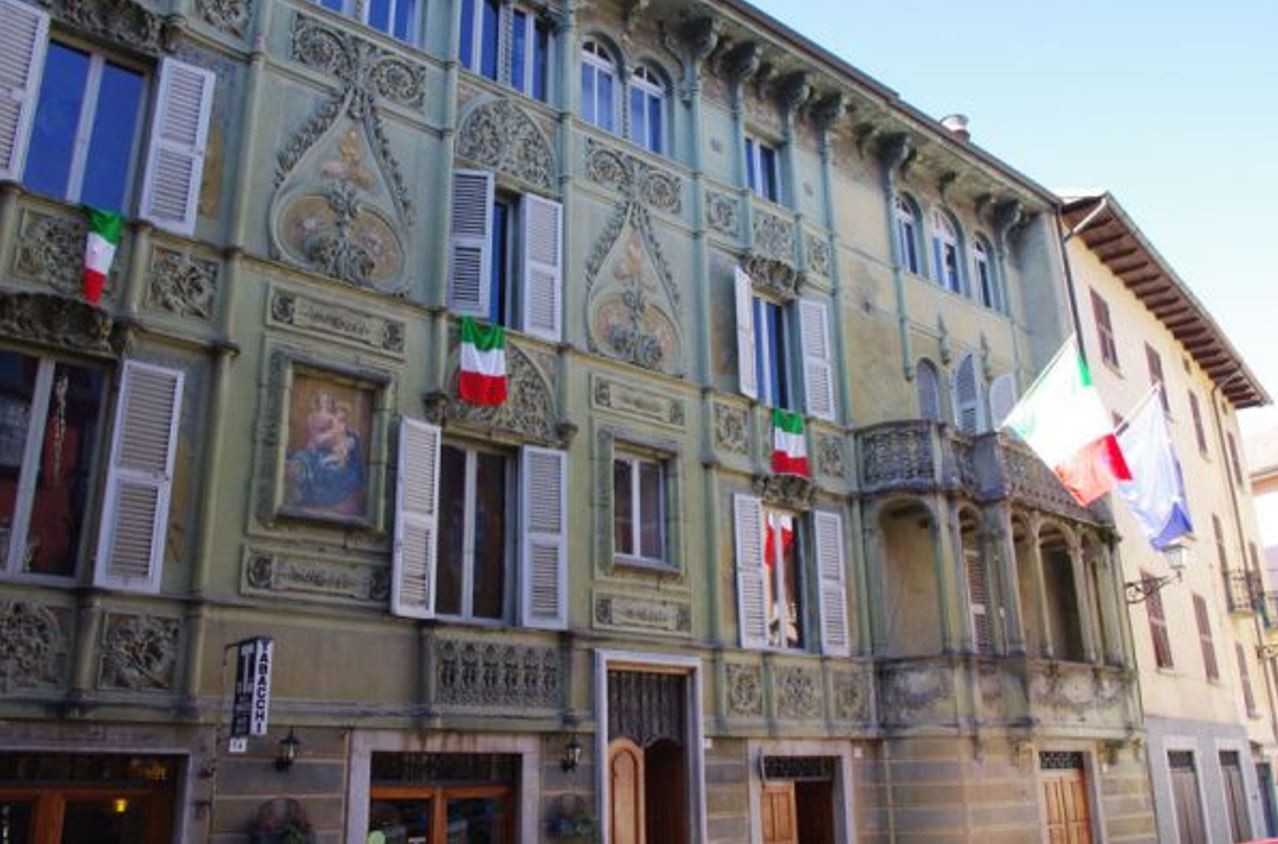
In San Sebastiano today, little remains of the Visconti (perhaps the Castle), and nothing of the Malaspina and Fieschi families. The Doria family, however, invested with the fiefdom by Charles V in 1547, built their own palace there, which is still called the Casa del Principe (Prince's House), adjacent to the Oratory of the Bianchi. They left their coats of arms in the churches and many archival mementos.


- Home
-
-
- Events calendar
-
-
Areas of interestAccomodation
- Photographic Archive
-
-
-
-
Tourist information
