
Comune Melazzo
Useful information for your stay
piazza XX Settembre, 1 - 15010 Melazzo (AL)
Tel. +39 (0144) 411.01
Fax: +39 (0144) 415.77
E-mail: info@comune.melazzo.al.it
https://www.comune.melazzo.al.it/
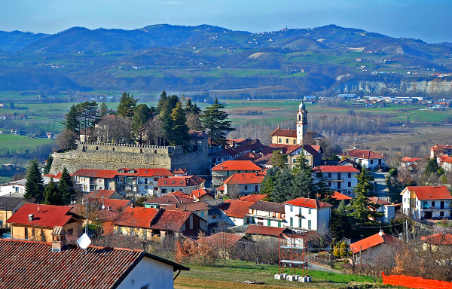
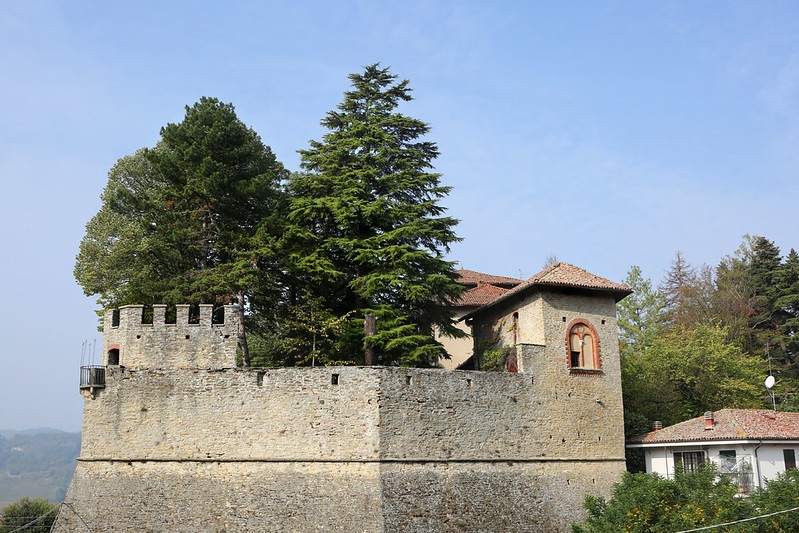
Gathered around the castle, surrounded by high, sturdy walls, owned by the Counts of Aquesana, a noble family from Acqui, Guido dei Conti dell'Aquesana was born here in 1004. He became Saint Guido, Bishop and patron saint of the city of Acqui from 1034 to 1070. He donated his seigneurial rights to the church of Acqui, which obtained confirmation of ownership in 1039 and again in 1052 from Emperor Henry III.
The name Melazzo appears, starting in 991, with forms derived from the adjective "MELACEUS," in the variants "Melacius," "Melagius," "Melaxus," "Melazius," and "Melaz" (the latter clearly of dialectal origin).
In Roman times, the area was crossed by a tunnel that carried the waters of the Erro stream to the Roman aqueduct, traces of which remain visible in Acqui Terme.
In the 13th century, it became a possession of the Marquises of Bosco, who soon ceded it to the municipality of Alessandria, claiming its investiture. The latter, occupying the castle and towers, provoked harsh but futile protests from the Acqui town.
Having become part of the domains of the Marquises of Monferrato, it was sacked by the troops of Francesco Sforza in 1431.
Melazzo was a fiefdom of the Diocese of Acqui around the year 1000. It then passed from the Church of Acqui to the Municipality and subsequently to the Marquises of Monferrato. In 1500, the Falletti family became lords of Melazzo.
The fiefdom was later purchased by the Duke of Mantua and Monferrato, who gave it to the Gandolfi family, Marquises of Melazzo and Ricaldone, whose family had close ties to the House of Savoy. In the 16th century, the castle was destroyed by the Spanish and subsequently rebuilt by the Gandolfis.
The last of the Gandolfis, Giuseppe Accellino, bequeathed all his Melazzo properties to the Roberti family.
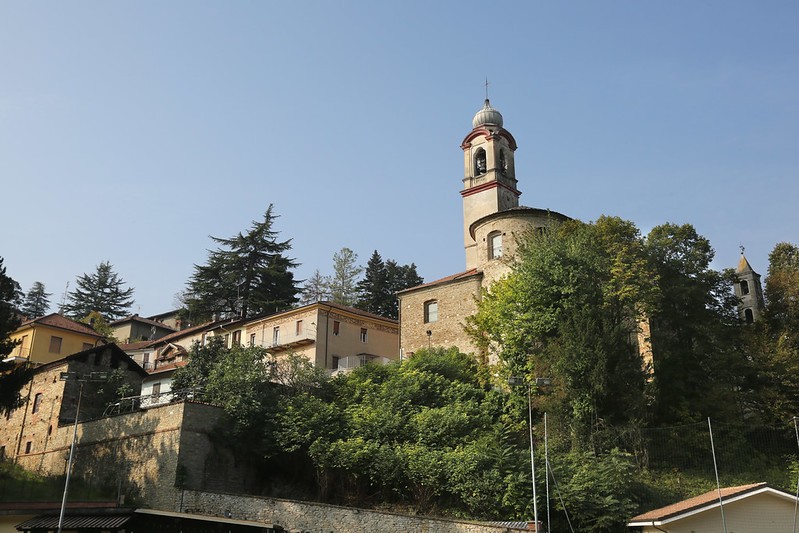
In addition to the aforementioned Gandolfi Castle, surrounded by high, massive walls, there are numerous testimonies to Melazzo's past: the Church of San Defendente; the Oratory of San Pietro Martire, dating back to the 15th century; the Parish Church of San Bartolomeo, from 1759, which houses a painting by Guglielmo Caccia; the Church of the Annunziata, built in 1783; the octagonal fortress known as Tinassa, from the 14th century; the Church of San Felice and the Church of San Secondo, the latter characterized by its beautiful semicircular apse, historically linked to the reorganization of the Acqui diocese initiated by Saint Guido.
The parish church of San Bartolomeo, which no longer exists, was located on the valley floor between the Caliogna River and the Erro Stream.
On the opposite bank of the Erro stream, near the hamlet of Arzello, stands the Romanesque church of San Secondo, and not far away are the ruins of the Moncrescente Castle, known as the "Tinazza."
(image from the municipality's website)



- Home
-
-
- Events calendar
-
-
Areas of interestAccomodation
- Photographic Archive
-
-
-
-
Tourist information
