
Comune Fabbrica Curone
Useful information for your stay
Località Garadassi, 7 - 15050 Fabbrica Curone (AL)
Tel. +39 (0131) 782.131
E-mail: comune@fabbricacurone.it
https://www.comune.fabbricacurone.al.it/it-it/home
It is certain that some sporadic human settlements existed in Roman or pre-Roman times, when the mysterious Ligurian tribes occupied not only Liguria but also part of Piedmont.
This is evidenced by historical artifacts discovered in the nearby town of Guardamonte di Gremiasco, dating back to the pre-Christian period, and by the discovery of brick fragments in the Fabbrica area, which, both due to the material they were made of and the manufacturing technique, are attributable to that era.
At the end of the first millennium, the area was predominantly occupied by imposing forests of chestnut, oak, and beech trees, and only in the summer season did a few inhabitants graze their livestock, produce charcoal, and hunt the abundant game. Almost all actual villages emerged during the first centuries of the new millennium, following the significant migration of Ligurian people who, terrorized by the Saracen raids, sought refuge in the Apennine hinterland.
The village of Fabbrica is certainly the oldest in the area and arose around the 9th century as an outpost of the monastery of San Colombano di Bobbio.
In the "Diplomatic Code" of the Abbey of San Colombano, in a document from 844, there is mention of Leone and his nephews Orso and Evuardo, who resided in Fabbrica and were "Livellari" (landlords) of lands owned by the monastery.
Initially formed around the parish church, it later developed with the creation of a hospice or hospital where the monks provided hospitality to pilgrims and merchants.
With the expansion of feudalism, Fabbrica acquired its own castle, some ruins of which can still be admired. The entire territory was first assigned to the Bishop-Count of Tortona, with a papal bull issued by Pope Adrian IV on April 13, 1157. In the following century, it was granted to the Malaspina Marquises, who held it until the end of the Imperial Fiefdoms, decreed by Napoleon in 1797.
From the 15th century, the area of Costa, Serra, and Morigliassi was granted to the Frascaroli Marquises of Montacuto, while the remaining territory was assigned first to the Fieschi family and then to the Doria family, who became joint feudal lords with the Malaspina family.
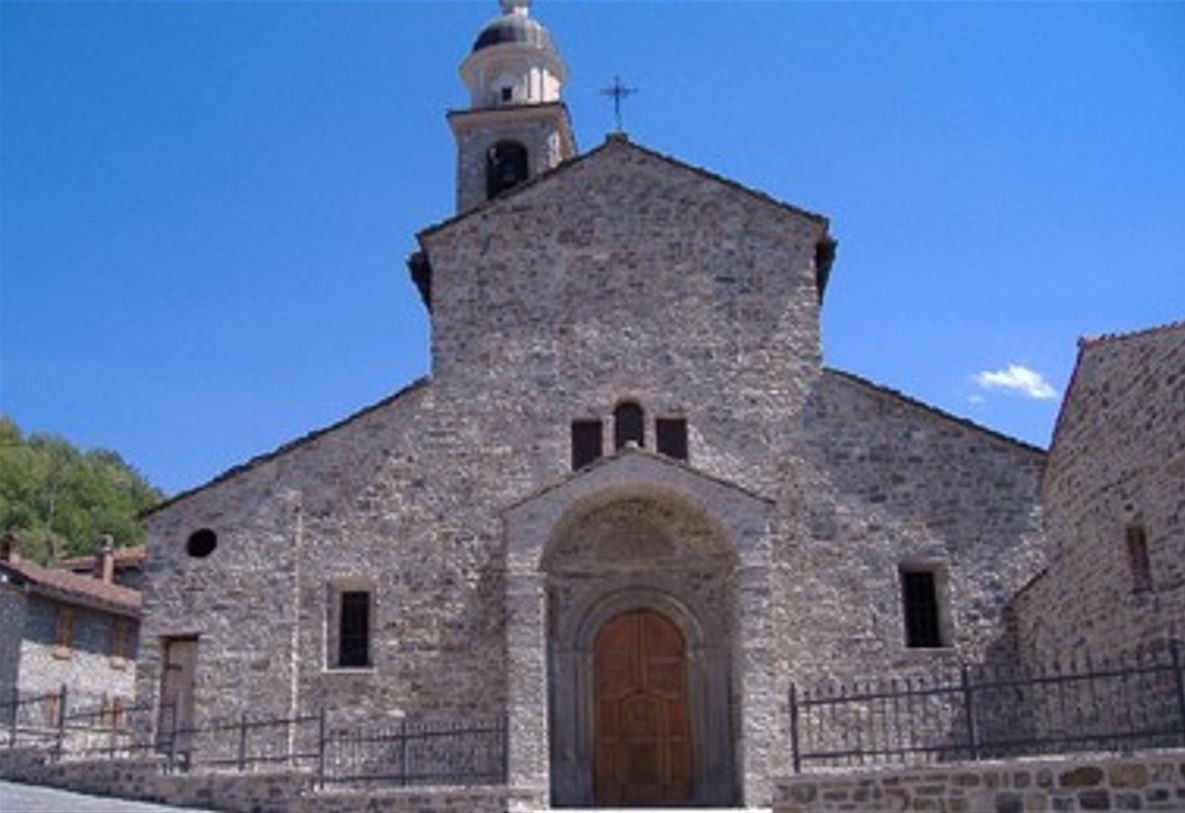
In addition to the remains of the Malaspina castle, Fabbrica boasts a splendid jewel of Romanesque-Gothic art: its parish church, one of the oldest and most important monuments in the entire valley.


- Home
-
-
- Events calendar
-
-
Areas of interestAccomodation
- Photographic Archive
-
-
-
-
Tourist information
