
Comune Casalnoceto
Useful information for your stay
piazza Dante Alighieri - 15032 Casalnoceto (AL)
Tel. +39 (0131) 809.172
E-mail: segretario@comune.casalnoceto.al.it
http://www.comune.casalnoceto.al.it
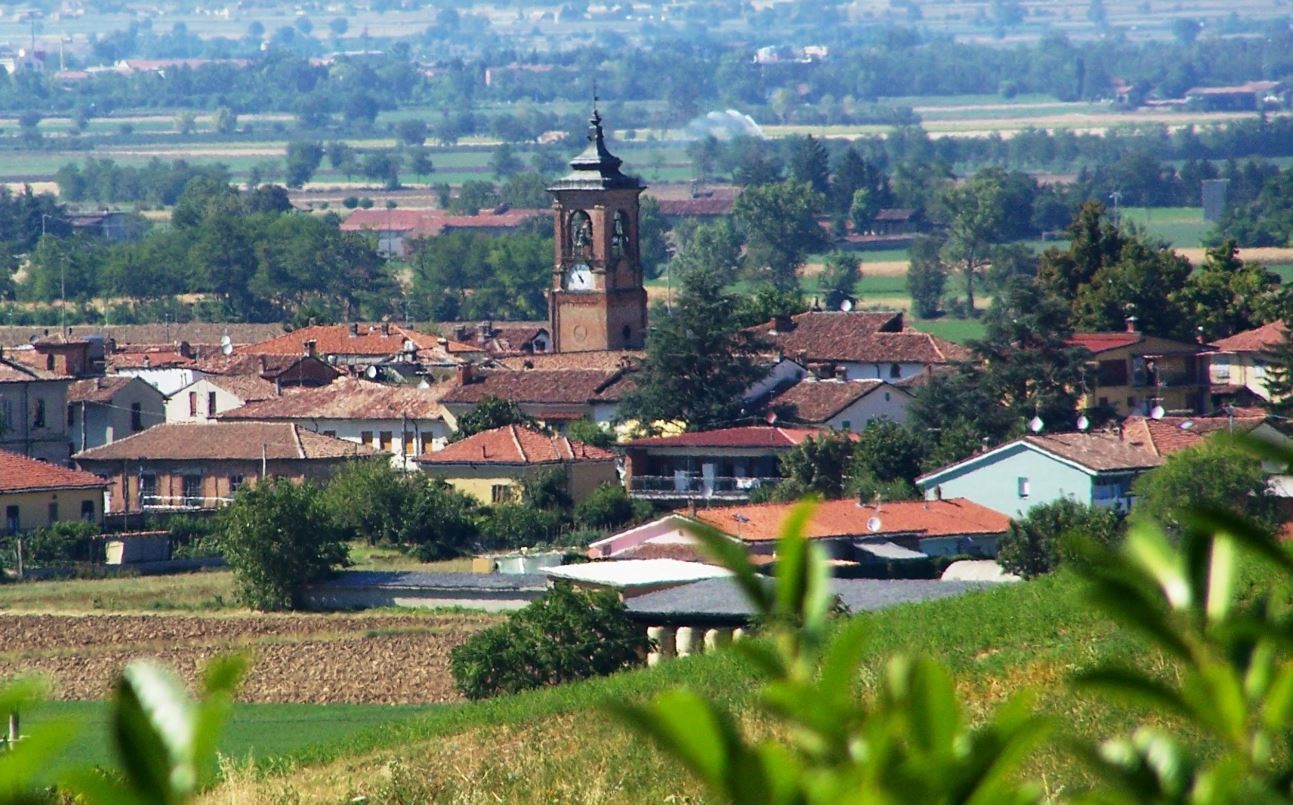
Located on the right bank of the Curone River, at the eastern edge of the province of Alessandria, Casalnoceto has been inhabited since prehistoric times, as recent archaeological excavations have demonstrated. It is among the most important sites documenting the so-called Square-Bottomed Vase Civilization, and the presence of vines has been demonstrated there as early as the early 4th millennium BC.
The toponym "Nucetum" is Roman, but the exact location of the original settlement is unknown. In the Lombard period, the most important center was Rosano, located on a branch of the Via Postumia, at the entrance to the Curone Valley. Around 1000 AD, Rosano had three churches, a judge, a notary, and was the site of important trade.
Up until 1200, Casalis and Nucetum appeared to be distinct settlements. The current name was used only from the mid-13th century onwards. Part Ghibelline, Casalnoceto was tied to the Visconti family, and as a result suffered several devastations. The most notorious example was the 1362 attack by the English Company commanded by Albert Sterz, who fought under the banner of the Marquis of Monferrato. In the late 14th century, Casalnoceto was fortified on the site of the current town, which clearly retains the layout of the classic Visconti fortress.
Enfeoffed to the Spinola family during the 15th century, it gained importance especially after the perpetual tax exemption granted to them by Emperor Charles V. The Spinola family, who bore the title of Marquises of Los Balbassos, distinguished themselves for several generations in the government of the Duchy of Milan, and in 1630 they built a large church and convent in Rosano after Ambrose, the Conqueror of Flanders, wished to be buried there. The Spinola family's presence in Rosano in the 16th century brought fame and wealth to Casalnoceto, which by the 17th century was one of the most important centers in the area. Much of the grain and guilder trade with the Republic of Genoa was controlled from there.
With the area's passage to the Austrians, the Spinola family's downward spiral began, and with it that of Casalnoceto. The last influential politician, Filippo Carlo Antonio Spinola, fled Rosano in 1708 and was appointed Viceroy of Spain in Palermo.
After Napoleon, the town's decline was confirmed, linked to the loss of its privileges during the previous century. With the headquarters of the vicariate forane, judicial offices, and administrative offices now gone, Casalnoceto was further isolated by the opening of the new road to the Curone Valley in the mid-19th century.
Casalnoceto was the birthplace of Giorgio Bidone (1781-1839), a hydraulics instructor at the University of Turin, whose name was linked to the so-called "Bidone Leap" and who was Massimo D'Azeglio's tutor.
Among the monuments, in addition to the Church of Santa Maria in Rosano, are the Oratory of San Rocco (15th-18th centuries), housed in one of the fortress's corner towers; the 16th-century parish church of San Giovanni Battista; the Fogliata sanctuary located on the hill overlooking Volpedo, beloved by Saint Luigi Orione, who oversaw its reconstruction; and finally, the former monastery of the Discalced Carmelites, now Palazzo Vaccari.
In the cellars of the school building, constructed in 1907, is the unique "La Memoria del Passato" museum, which presents testimonies and documents of 20th-century life.


- Home
-
-
- Events calendar
-
-
Areas of interestAccomodation
- Photographic Archive
-
-
-
-
Tourist information
