
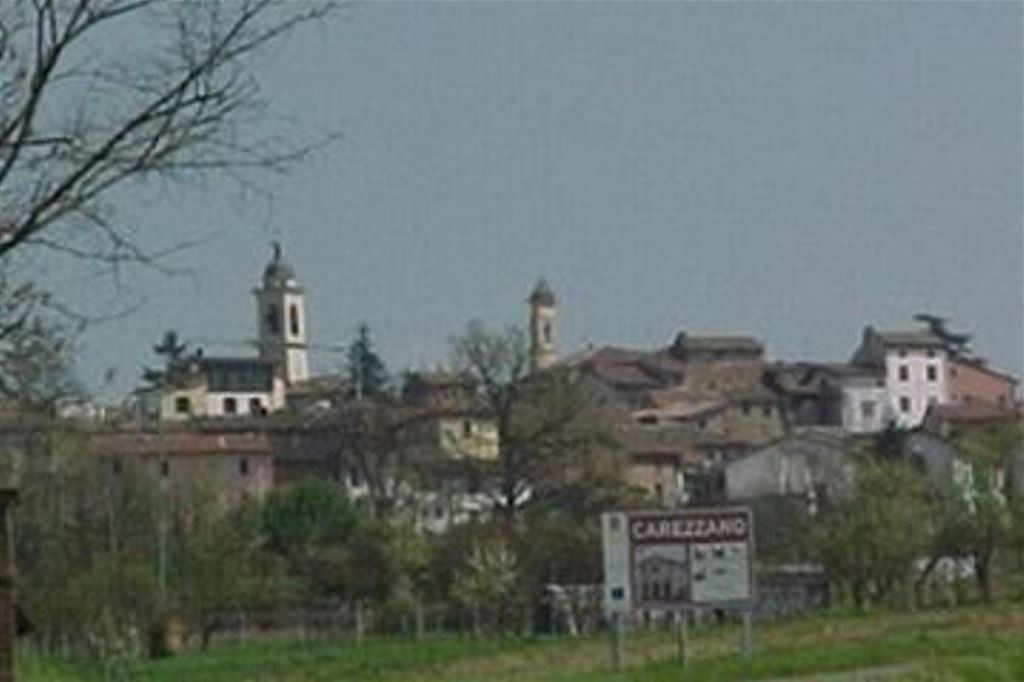
Comune Carezzano
Useful information for your stay
piazza Municipio, 1 - 15061 Carezzano (AL)
Tel. +39 (0131) 839.901
E-mail: info@comune.carezzano.al.it
http://www.comune.carezzano.al.it
The toponym Carezzano is derived from the two ancient Ligurian terms "car" and "san," meaning "high site," which still appear today in the dialect version "Carsan." It is difficult to estimate the period of settlement of the area, but the first documentary mentions of Carezzano date back to the 13th century, when the de Carezzano family first appeared. According to Merloni, they belonged to the noble consortium of the lords of Villa. In 1408, the two Carezzanos (Maggiore and Superiore) were owned by the Rampini family of Sant'Alosio.
Carezzano Maggiore became the capital of the Bishopric at the end of the 14th century: a lay jurist called Vicar Temporale resided there permanently (the first is documented from 1377). Indeed, since at least the end of the 13th century, the Bishop had exercised his temporal jurisdiction over a vast territory called the Vescovato.
Unlike the Diocese, which referred to the territory over which the Bishop of Tortona exercised his spiritual authority, the term Bishopric was used to describe the complex of lands and assets enfeoffed to the bishop's table and also subject to his political jurisdiction.
The territory had autonomous statutes, and jurisdiction was divided into the "Bishopric" proper, with its administrative capitals at Carezzano Inferiore and Stazzano, where a bishop's castellan resided.
On a hill above Carezzano, known as "Poggio del Castiglione" or "Bricco delle Streghe," was the place of torture where the condemned were executed, as happened to three women from the Bishopric who were condemned to the stake on July 5, 1520, because they were believed to be witches.
The location was carefully chosen so that the fires could be seen from all corners of the territory and serve as a warning to the citizens. The Bishop of Tortona's jurisdiction over this area ended in 1784 when Bishop Maurizio Pejretti ceded it to Charles Emmanuel III of Savoy.
Even today, in the Vicar's Palace, the rooms where the Bishop's government offices were located can be clearly seen, including the court clerks' offices, the court hearing room, and the office for collecting fines and issuing bills. The palace's cellars housed cramped prisons, and adjacent to them were the residences of the soldiers and prison guards.


- Home
-
-
- Events calendar
-
-
Areas of interestAccomodation
- Photographic Archive
-
-
-
-
Tourist information
