
San Giovanni Battista
Useful information for your stay
piazza Genova, 5 - 15070 Lerma (AL)
http://www.diocesiacqui.piemonte.it
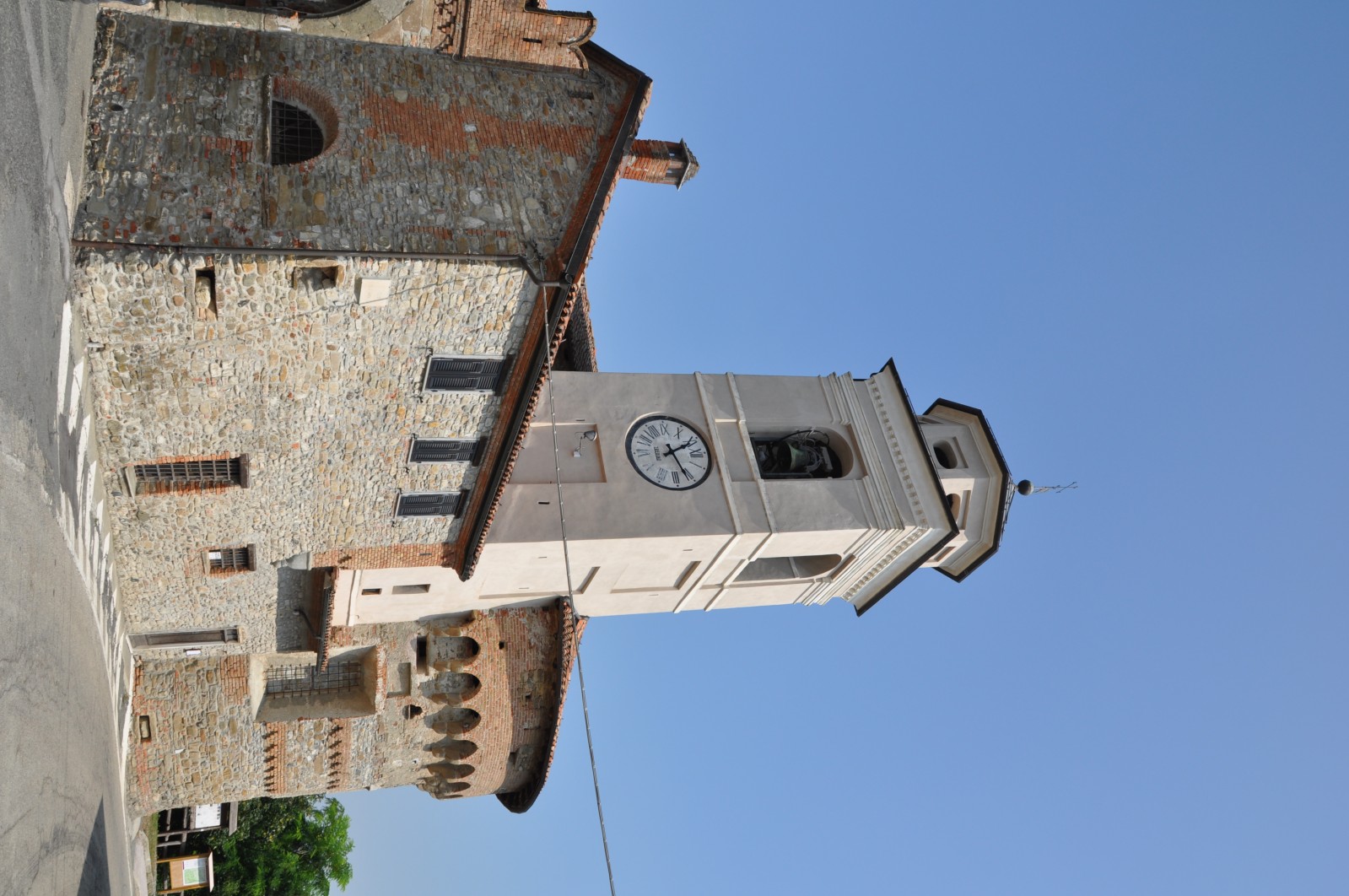
The first documents relating to it date back to 1544, but it is believed to have been built at the end of the 15th century during the renovation of the entire castle, which gave it its current form. During those years, the Sanctuary of Our Lady of the Rocchetta was also built, and the fresco cycle of the Romanesque parish church of San Giovanni al Piano was created. The architect of all this was Luca Spinola, Lord of Lerma, a very religious and generous man. The fact that the North Tower, once used as an armory, was transformed into a place of worship is of great symbolic significance. Throughout history, the opposite has often happened: places of worship were transformed into fortifications. The slits and machicolations from which all sorts of materials and liquids were dropped to counter the attack of besiegers are still visible on the tower's exterior walls. The apse we see today was, in fact, part of the tower's interior walls. The central body developed to orient the church to the east, according to the rule still in force at the time. The layout is a Latin cross. The entrance is through a beautiful door dating back to 1824, in the late Piedmontese Baroque style fused with decorative elements typical of the Genoese Baroque, reflecting the local culture that straddles the two regions. In the right bay is a crucifix by Anton Maria Maragliano and his workshop from 1738. In the left bay is a valuable painting entitled "Death of Saint Alexis." The nearby niche contains the precious relics of the Holy Martyrs, almost all from the Roman era. In the opposite niche is the church's most important piece, highly valuable both artistically and historically, and closely linked to the centuries-old history of the Lermo community: the Madonna and Child by Barnaba da Modena, a respected 14th-century painter who was active in Genoa for a long period from 1353 to 1380 (approximately 30 years), and who had acquired Genoese citizenship. His works are held in the most important museums and collections around the world, including the Louvre, the National Gallery in London, and the Museum of Fine Arts in Boston. This is a tempera on panel arched at the top to form a Gothic pointed arch with gilded pastiglia decorations. A visit to Lerma is worthwhile for this work alone! In the chapel on the left side of the transept, we find a wooden statue from the 1700s, also by Maragliano: "The Madonna of the Rosary." This work is by his hand, as until that date, Maragliano worked alone in his workshop in Genoa. There are also other 17th- and 18th-century paintings both in the other Sacred Heart chapel in the transept and in the presbytery. On the counterfaçade, we find a beautiful, fully functioning organ and a plaque commemorating the church's restoration, completed in 2008 thanks to a donation from Luigina Baldo. In the apse, we find a valuable fresco, rich in history for the Lerma community. The central scene depicts the Baptism of Christ administered by John the Baptist. The iconographic content is drawn from the three Synoptic Gospels recognized by the Church as official. In 1612, again at the request of Violante Spinola, the Church of Lerma was enlarged to its current dimensions.


- Home
-
-
- Events calendar
-
-
Areas of interestAccomodation
- Photographic Archive
-
-
-
-
Tourist information
