
Comune Montechiaro d'Acqui
Useful information for your stay
piazza Battisti, 1 - 15010 Montechiaro d'Acqui (AL)
Montechiaro Alto
Tel. +39 (0144) 920.58
Fax: +39 (0144) 952.949
E-mail: info@comune.montechiarodacqui.al.it
http://www.montechiarodacqui.net
Website:
www.comune.montechiarodacqui.al.it/
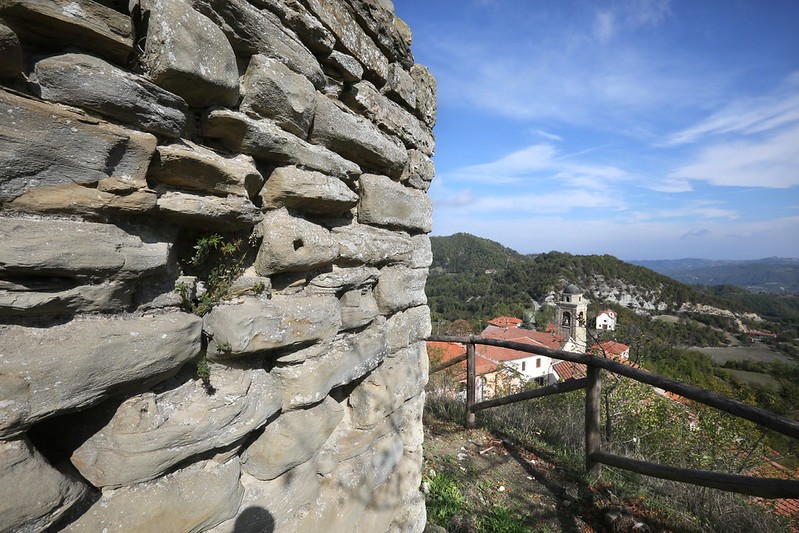
Ancient stone village of Langa, immersed among ravines and woods, with a view that ranges from the Ligurian Apennines to the Langhe to the Po Valley, perched around the hill which was once home to a castle, destroyed in 1646. Some remains of the castle are still present on the crest which separates the Bormida and Erro valleys. Montechiaro d'Acqui has ancient origins, dating to the Roman period and connected with the ancient Via Emilia Scauri.
In the Middle Ages, the village was the scene of clashes between the different factions which fought for the control of the area. Its position, between the Po Valley and the port of Savona, made it the transit area for the French, Spanish, Savoy and Napoleonic armies, and it became the scene of numerous conflicts and battles. Over the centuries, Montechiaro d'Acqui has expanded and grown richer, thanks to the presence of noble families who have built palazzi and castles in the surrounding and adjoining areas.
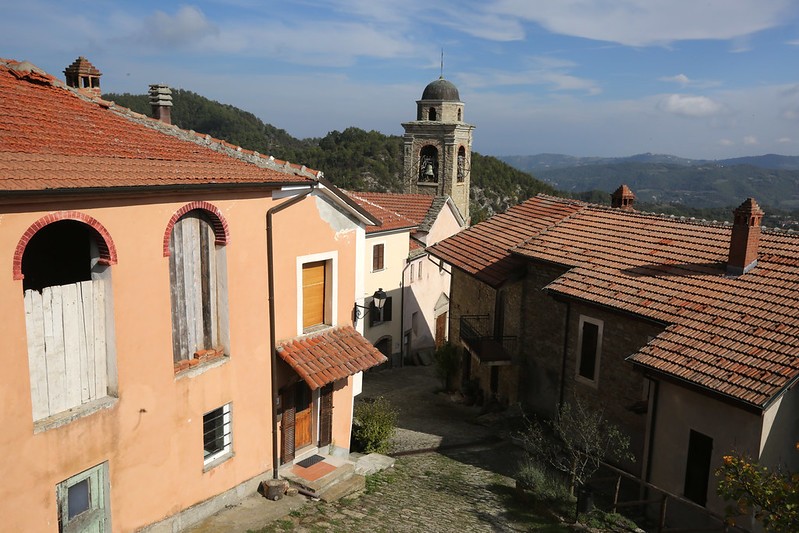
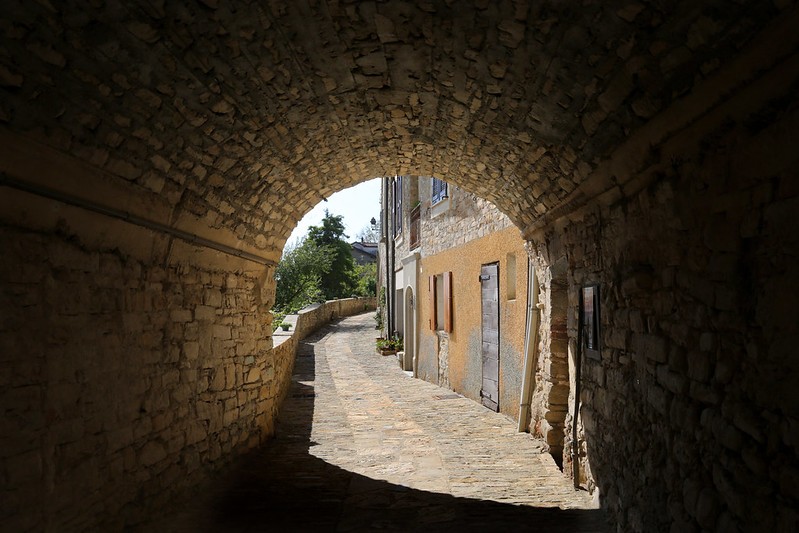
The historic center is separated from the more modern part of the village and it is characterized by narrow streets which retain the original paving with a particular layout of stones. The historic center is very well preserved and presents numerous palazzi which carry tangible signs on the walls of a medieval and renaissance
past.
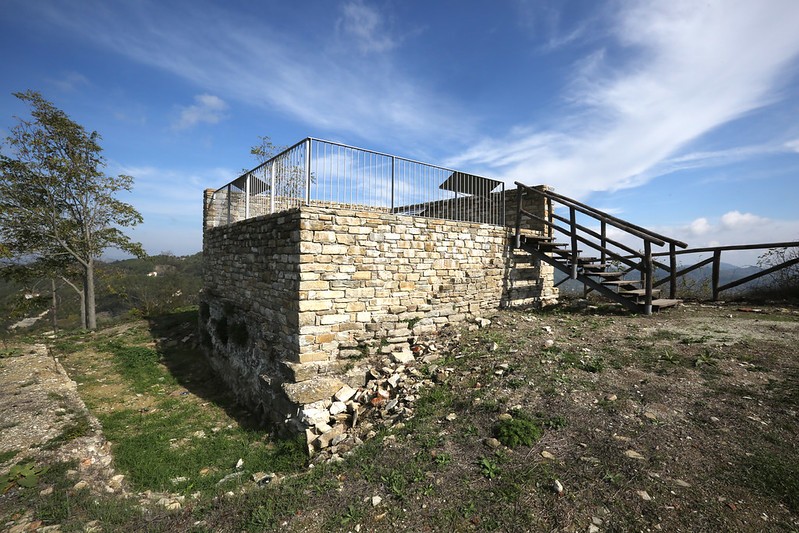
The key buildings of historical and artistic interest include the remains of the Castle built in the 12th century by the Aleramici Marquises. It was enlarged and modified over the centuries and destroyed by the Spanish in 1630. The remains of the castle were once again remodeled in 1966 to make the area safe. Part of the bastions and the underground rooms remain.
The Church of San Giorgio is located in the middle of the historic center. It dates back to 1595 and features a facade in late renaissance style, three interior naves with columns of carved sandstone, and the beautiful stone tabernacle of 1300.
Next to it is the Oratorio of Sant'Antonio which is home to the Holy Thorns of Christ's Crown. There is a fascinating story attached to this relic, for anyone wishing to explore it.
The beautiful staircase which climbs in the historical area is also in sandstone and particularly scenic. It was built in 1930 and seems to have replaced a paved section known as "ponte" (bridge) which climbed the slope. What is sure to catch the eye is the 45m high chimney made of red brick, a piece of industrial archaeology which is a sign of the activity of the furnace, which operated almost uninterruptedly from 1700 to the 1960s. This is where bricks and tiles were made using local clay.
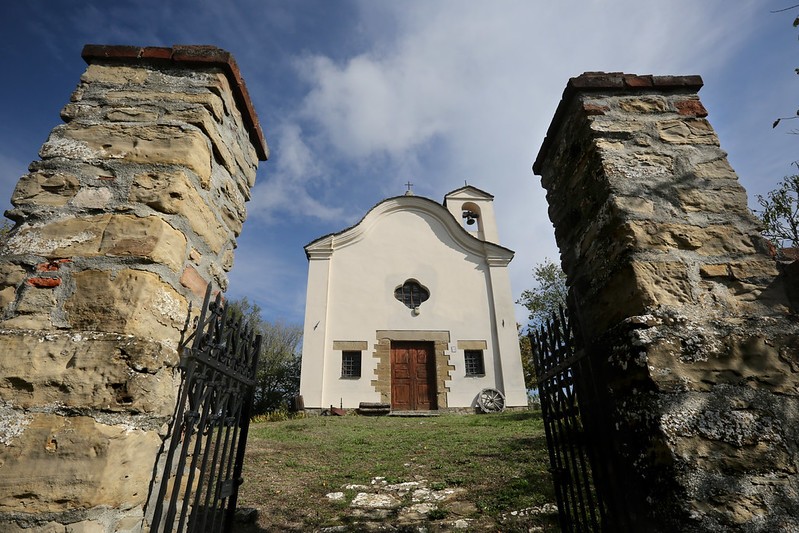
A few kilometers from the village is the Sanctuary of Madonna della Carpeneta, built in 1653 around a 16th - century aedicule which is still frescoed. The sanctuary is a baroque church built in the 18th century.
The surrounding territory is rich in hills, covered with vineyards, chestnut and oak forests. from where numerous CAI hiking trails set off.
The true feature of this village is the anchovy, served with a local sauce… the recipe is partly still secret. A spring celebration called Anciuada del Castlan is dedicated to the anchovy, at which the famous panini are served. The religious procession "delle Sante Spine" (of the Holy Thorns) is held on the same day and recalls the transportation of the precious relics of Christ's crown to the church, following its recovery in the Holy Land.
For more information visit the website of the Municipality https://www.comune.montechiarodacqui.al.it/Guidadettagli


- Home
-
-
- Events calendar
-
-
Areas of interestAccomodation
- Photographic Archive
-
-
-
-
Tourist information
