
Comune Castelletto d'Orba
Useful information for your stay
piazza Marconi, 2 - 15060 Castelletto d'Orba (AL)
Tel. +39 0143 830032
Fax: +39 (0143) 830.623
E-mail: protocollo@comune.castellettodorba.al.it
http://www.comune.castellettodorba.al.it
Website:
www.comune.castellettodorba.al.it/
Visit
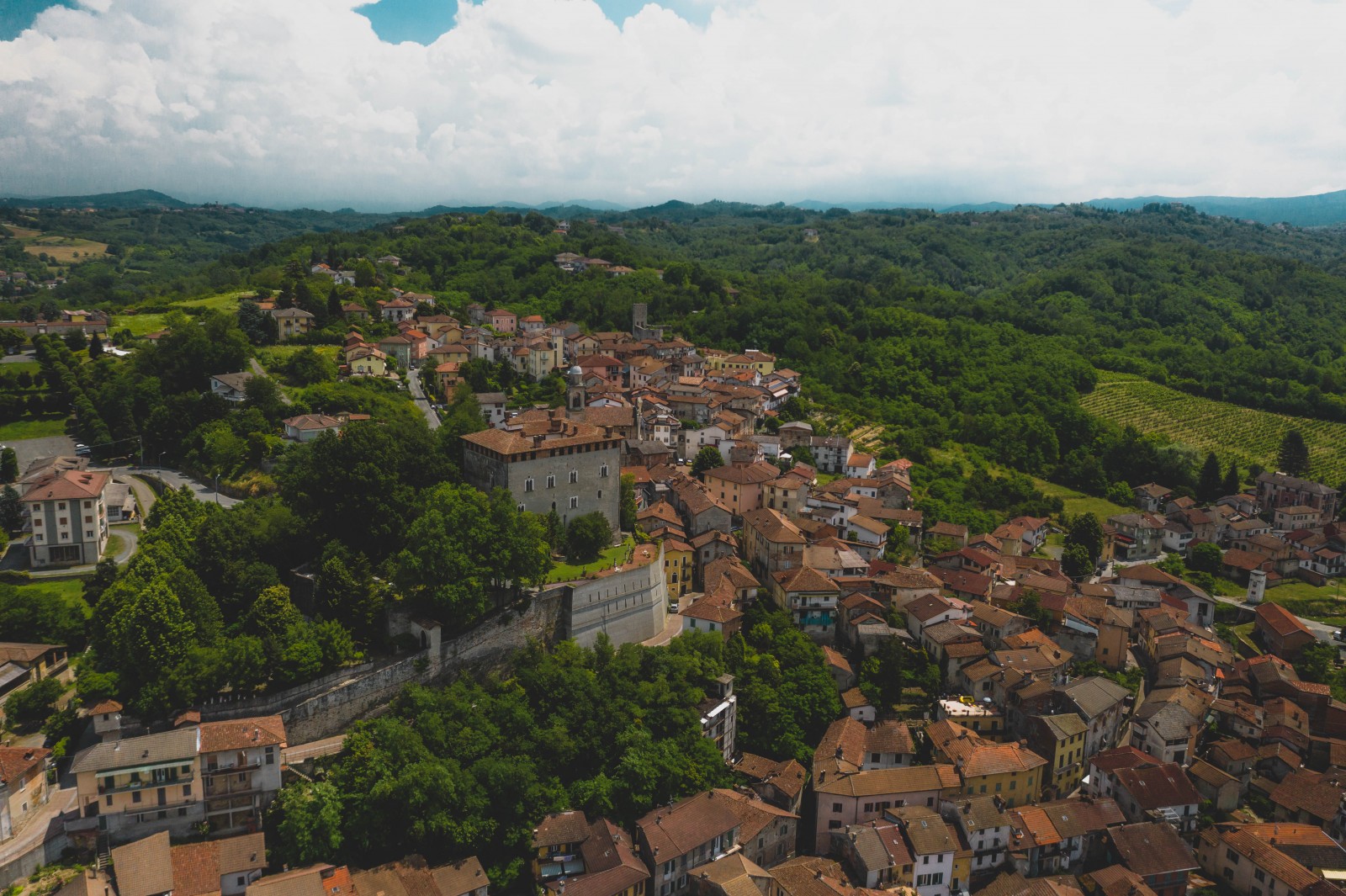
Our walk begins near the cemetery with a visit to the Church of Sant'Innocenzo: the oldest church in the village; built in the year 1000 on the ruins of a pagan temple, it was elevated to a parish in the 12th century. The façade is gabled, while the interior, in a Latin cross plan, preserves frescoes dating back to the 15th and 16th centuries. Entering from the upper part of the village, we find the Parish of Sant'Antonio Abate, which dates back to the 14th century; the layout is Baroque, and the interior, with a single nave, preserves the body of St. Innocent the Martyr. The current construction of the castle dates back to the mid-13th century: it features typical Piedmontese Gothic elements, such as the mullioned windows with marble columns and Ghibelline battlements.
We arrive in the town's main square, which overlooks the Parish of San Lorenzo, a small Romanesque church completely transformed during the 18th century. The Baroque interior, with three naves, houses the urns of the martyrs Faustino and Teodora, transported from Rome in the 18th century. The third parish church is located in the hamlet of Crebini-Cazzuli and is dedicated to Saint Francis of Assisi. The cornerstone was laid in 1924 and it opened for worship on September 13, 1925. Numerous churches and chapels are located within the municipality: among the most important are Sant'Anna, in Passaronda, and the small Church of San Rocco, on the road to the springs.
History
It is one of the oldest villages in the Alto Monferrato area, and its name derives from Castrum, meaning "fortified place." The first Roman settlement arose in Castelvero, and after the mid-10th century, the Obertenghi Marquises built a small castle. In the 13th century, the Marquises of Monferrato built the current fortress, adding a fortified wall. Castelletto was subsequently contested by numerous Genoese families and, with the Congress of Vienna, became part of the Kingdom of Savoy.
Interesting Facts
Of great importance to the area are the numerous springs in the town; their medicinal properties were discovered around the mid-18th century and were recommended for the treatment of various ailments, such as stomach ailments, kidney stones, and rheumatism.


- Home
-
-
- Events calendar
-
-
Areas of interestAccomodation
- Photographic Archive
-
-
-
-
Tourist information
