
Comune Borgoratto Alessandrino
Useful information for your stay
piazza Roma, 5 - 15013 Borgoratto Alessandrino (AL)
Tel. +39 (0131) 278.138
Fax: +39 (0131) 278.141
E-mail: segreteria@comune.borgoratto.al.it
https://www.comune.borgoratto.al.it/
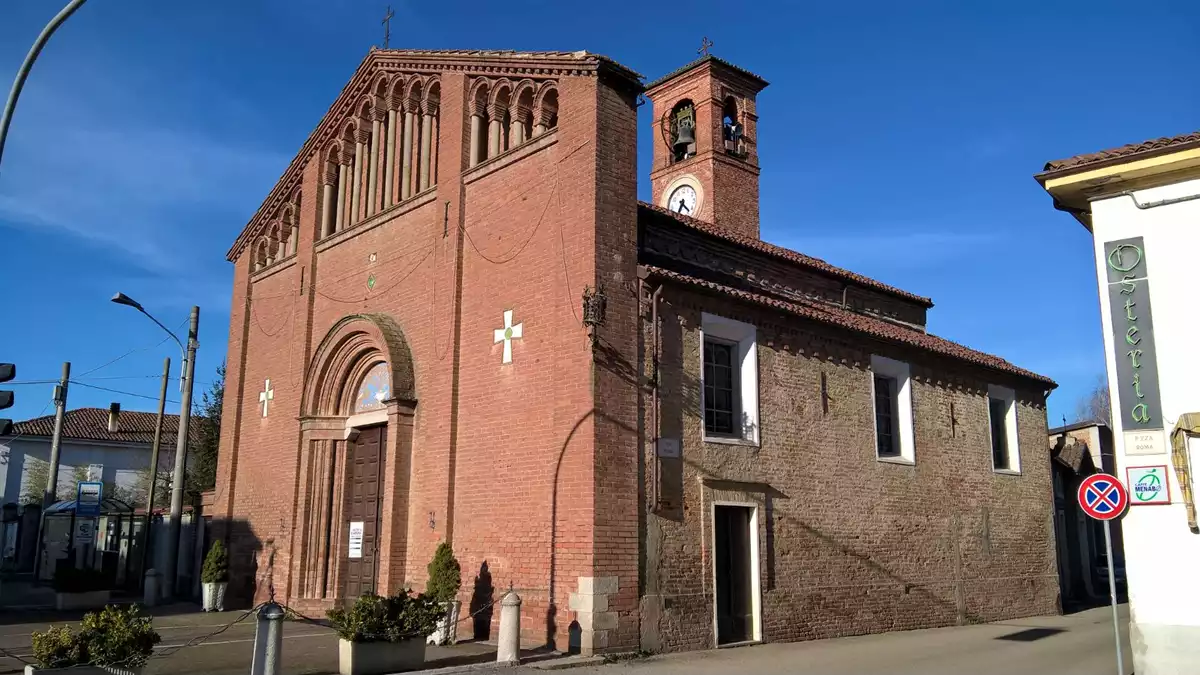
Although it is probable that the town originated from a Roman stopping place on the Via Fulvia, near a ford on the Bormida, we have to wait until March 1203 to find the first written document and therefore the "instrumentum" of 1222 regarding the church dedicated to S. Maria Assunta. Borgoratto, which became a "holy body" (hamlet) of the newly formed Alessandria (1165 - 1175), had to suffer all the repercussions of the events in Alessandria, especially after the city was swallowed up by the Duchy of Milan (1316). In 1535 it became part of the Crown of Spain and with the reorganization of 1658 it became an autonomous municipality. The construction of the Napoleonic Cassine - Strevi - Alessandria road dates back to 1801 and still today crosses a large part of the town. Borgoratto is closely linked to the subsequent events of the Risorgimento with Romeo Bozzetti, a Lombard-Venetian refugee who later became a leading figure in the Expedition of the Thousand.
Illustrious figures associated with the village of Carentino include: Cino Bozzetti, one of the leading figures at the 1915 Italian Engraving Exhibition, who fifteen years later, with a solo exhibition in Turin, confirmed his status as one of the finest engravers of the early twentieth century. His oil and watercolor paintings are significant, though long lesser-known. Some of his etchings are housed in the town hall, while a reproduction of his painting "The Encounter" is installed on the Artists' Big Bench; Ernesto and Mario Ferrari, father and son, artisan blacksmiths, achieved true levels of artistry in ironwork. While maintaining a certain sobriety in their lines, they devoted singular attention to research and execution of detail, so much so that each "creation" manifested a unique and surprising refined taste. The display case in the town hall features some small sculptures and sketches by the two artists, while the Big Bench features a photographic reproduction of a detail of the gate of Villa Ravizza. Cesare Bruno, whose intense and prestigious professional career as a doctor was accompanied by a highly significant pictorial production, with chairs being the distinguishing feature of most of his works, features a reproduction of his painting "Nell'isola dei Feaci" (On the Island of the Feaci), 1974. Mario Conzano, an artist who loves to tell life stories by portraying his characters with strong and incisive gestures, has donated several of his works to Borgoratto, which can be admired in the town hall. A reproduction of his painting "La banchèina," a particularly significant painting depicting a scene of daily life in Borgoratto, is installed on the Big Bench. Riccardo Cassola, a self-taught artist, began with classical figurative art—still lifes and landscapes—before developing a parallel, highly personal style consisting of geometric figures, variously composed and arranged. He has donated several of his works to the Municipality, which can be admired in the town hall. The murals that adorn his home are visible on Via Acqui, and a reproduction of his painting "Riuniti per i pettegolezzi di fine estate" is installed on the Big Bench.
(Text - excerpt - and photo from the Municipality website)


- Home
-
-
- Events calendar
-
-
Areas of interestAccomodation
- Photographic Archive
-
-
-
-
Tourist information
